
5 Ways Acting Techniques Can Boost Employee Confidence at Work
Theatre Acting Courses by Tiatr-O help employees build confidence, communication, and presence at work using proven acting techniques. Learn more today, now.

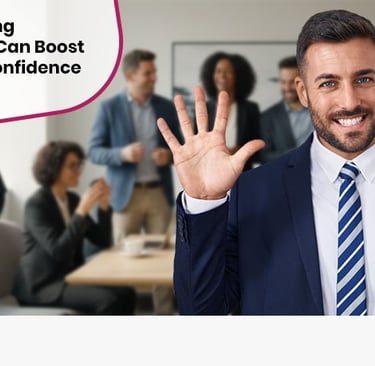
Is confidence something people just have? Actually, it's more like a muscle. You build it through practice. And some of the best exercises come straight from the theatre world. This is the principle behind our work at Tiatr-O. Imagine corporate training inspired by theatre acting courses, where leaders learn to show empathy, authority and intention. It gives teams a surprising toolkit to develop confidence that feels real and not forced.
Let's take a look at how these staged techniques change your office.
How Acting Techniques Build Employee Confidence in Modern Workplaces
Practical skills can be learnt with the help of acting techniques which enable the employees to be well prepared, communicative, and confident in their response.
1. Role Immersion Builds Confidence in Difficult Workplace Conversations
Role immersion means fully exploring another person’s perspective. At the workplace, you use it before a tough talk. This technique is a core element taught in professional theatre acting courses designed for workplace communication and leadership presence. Instead of worrying, you rehearse the conversation from your colleague's angle. What are they feeling? What's their goal? This switch builds genuine empathy. And this empathy cuts the anxiety out of hard talks. You walk in feeling prepared, not panicked. Through repeated role immersion exercises, employees build confidence by rehearsing real situations before facing them.
2. Body Language Builds Confidence Before You Speak
Ever feel nervous and then notice your shoulders are up towards your ears? Our minds and bodies are in constant conversation. Actors know this intimately. Embodied communication training helps employees become aware of that link. Team practise power poses, intentional eye contact, and grounded stances. It's not about faking it. It's about using your posture to actually create a calmer, more confident state inside. Your body leads, your mind follows. This is why embodied communication is especially effective in high-pressure workplace situations. This awareness strengthens workplace presence during meetings, presentations, and leadership conversations.
3. Emotional Awareness Helps Employees Stay Confident Under Pressure
Emotional agility is the ability to notice, regulate, and redirect emotions in real time. In a stressful meeting, this skill makes the difference between reacting and responding. It means noticing the flutter of frustration or spike of stress as it happens. Then, you choose. Do you react from that feeling or channel it differently? Training gives employees a pause button. And that moment of choice is where professional poise is born.
4. Improvisation Techniques Reduce Fear of Mistakes at Work
Improvisation is a form of experiential learning that trains people to respond with confidence in real time. It is the art of building together. Its golden rule is simple: "Yes, and." You accept what your partner offers and add to it. At work, this kills defensive thinking. Improv workshops encourage teams to listen, adapt, and build ideas on the fly. There's no script. The fear of messing up melts away because mistakes become just another offer to build upon. What grows is a team's creative courage.
5. Voice Control Techniques Improve Confidence and Clarity at Work
Many smart ideas get lost in a mumble, a monotone, or rushed speech. Actors treat their voice as their main instrument. Vocal training isn't about being loud. It's about clarity, pace, and using silence. Employees learn breath control for calmness, articulation for crispness, and tonal variation for impact. When you hear your own voice conveying authority, you start to believe in it. That belief changes how you speak up forever. This skill is especially useful during performance reviews, conflict discussions, and high-visibility meetings.
Bringing the Stage to Your Office
So, this isn't about creating office Oscar winners. It's the opposite. It's using the actor's disciplined rehearsal process to uncover someone's most authentic, capable self at work. The principles taught in theatre acting courses are exactly what modern teams need: practical, human-centred drills for empathy, presence, and resilience.
Theatre-based methods are increasingly used to build confidence through practice rather than theory. Tiatr-O applies these principles through immersive workshops that help teams develop presence, empathy, and communication skills rooted in real human behaviour. Ready to boost your employee confidence the right way? Contact us today!

India’s leading theatre community involved in performing arts and theatre based corporate training.
Follow us on:
Contact
A-506, Kailas Business Complex
Hiranandani Link Road, Parksite Vikhroli West, Mumbai - 400079 INDIA
Phone
+91 9321220594
Email
info@tiatr-o.com
Explore
Copyright © 2026 Tiatr-O. Designed & Developed by Avira Digital Studios.